
How CATALYST Empowered Student Innovators at NASA’s Global Hackathon
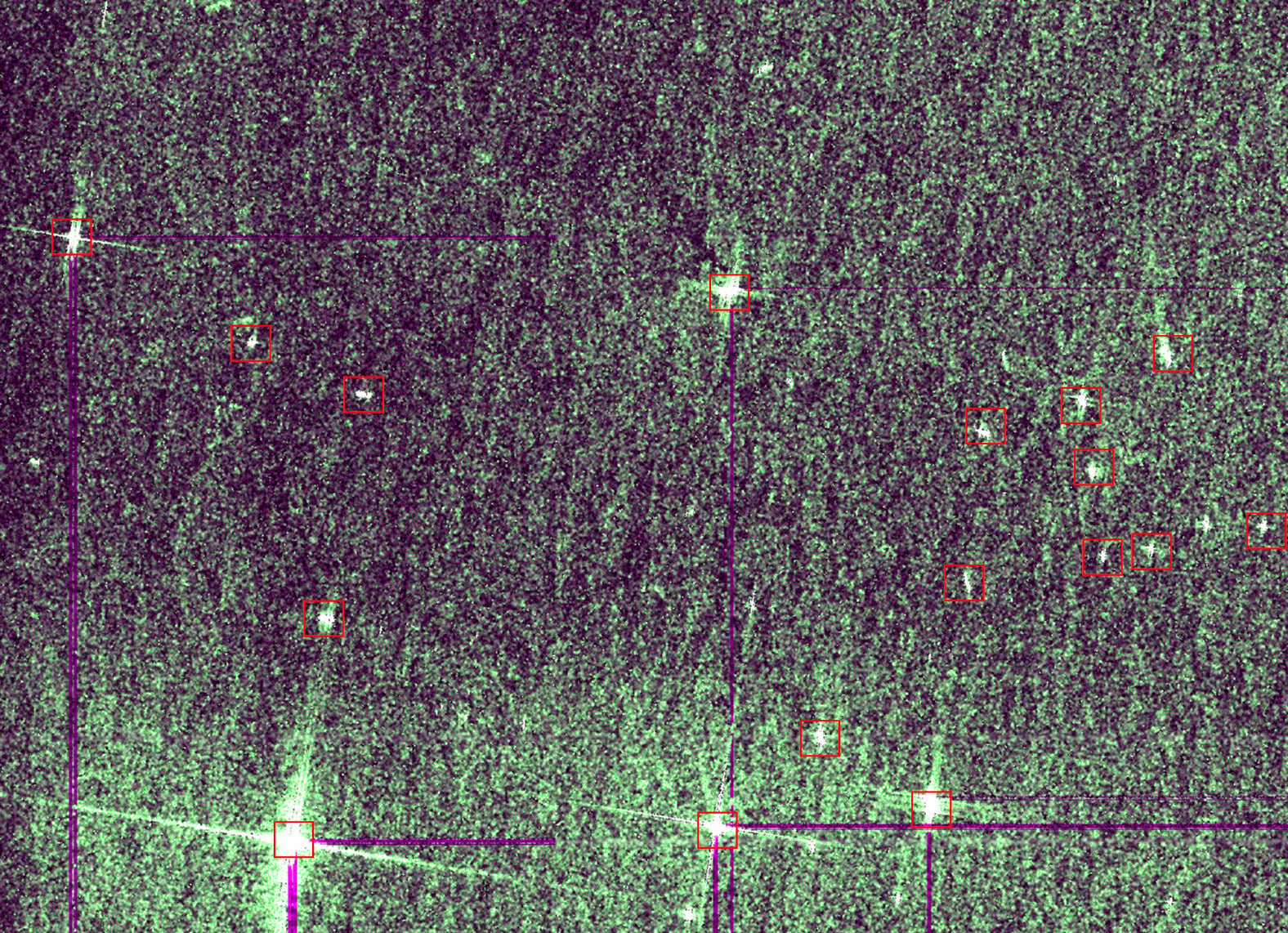
When fourth-year students Frank Tan and Isaac Huang walked into the University of Waterloo's NASA International Space Apps Challenge last October 2025, they were about to tackle one of the most demanding problems in Earth observation: teaching machines to detect ships in radar imagery. What made their achievement remarkable wasn't just the sophistication of their solution - it was that they built it with mentorship from a company that has been partnering with their university for over two decades.
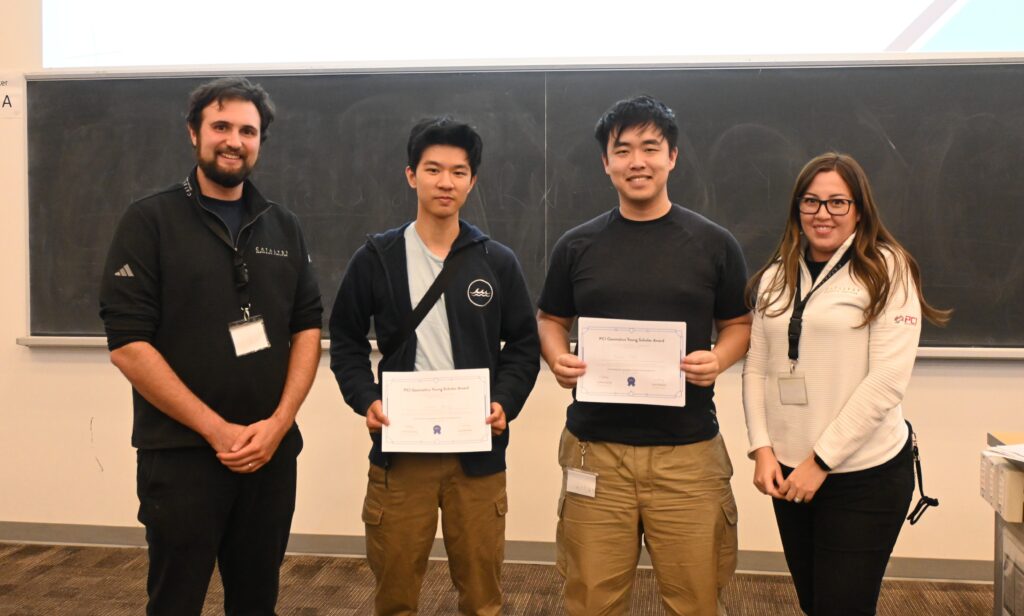
From Left to Right: Jason Flatt, Isaac Huang, Frank Tan, Cristina Goring.
More Than a Sponsorship
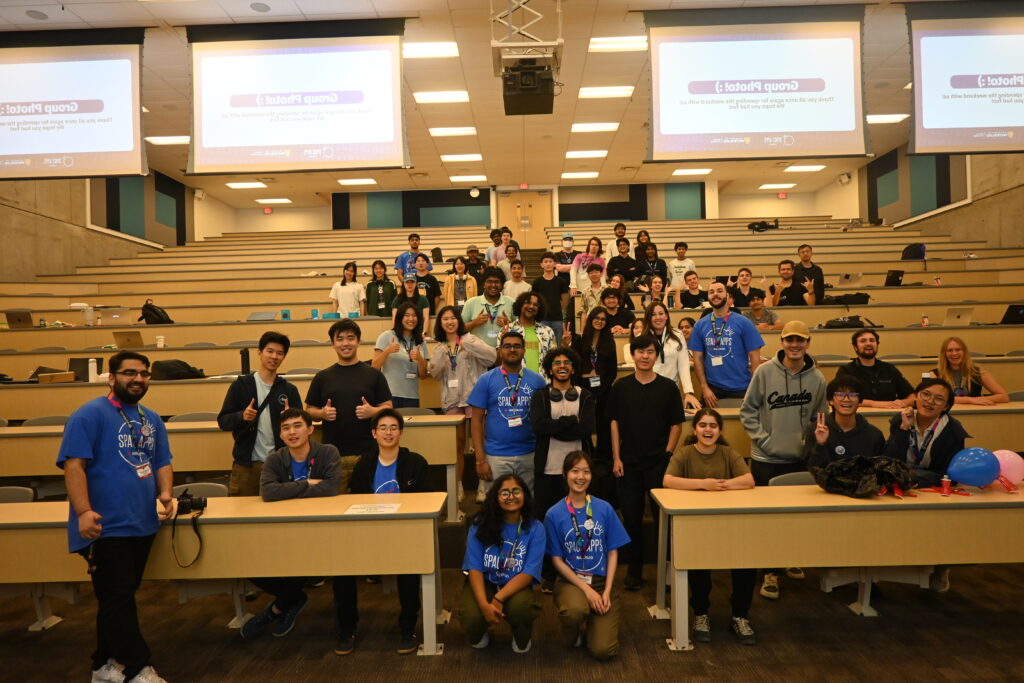
The NASA International Space Apps Challenge is the world's largest global hackathon, bringing together innovators to solve real scientific problems using open data. Last year, CATALYST (PCI Geomatics) served as the main sponsor of the University of Waterloo's local event.
Our team members Cristina Goring, Customer Success Manager and Jason Flatt, Technical Solutions Specialist, spent the weekend on-site, working alongside participants, answering questions, and helping students navigate the complexities of SAR (Synthetic Aperture Radar) data processing. For us, it was about giving back to a community that has shaped who we are as a company.
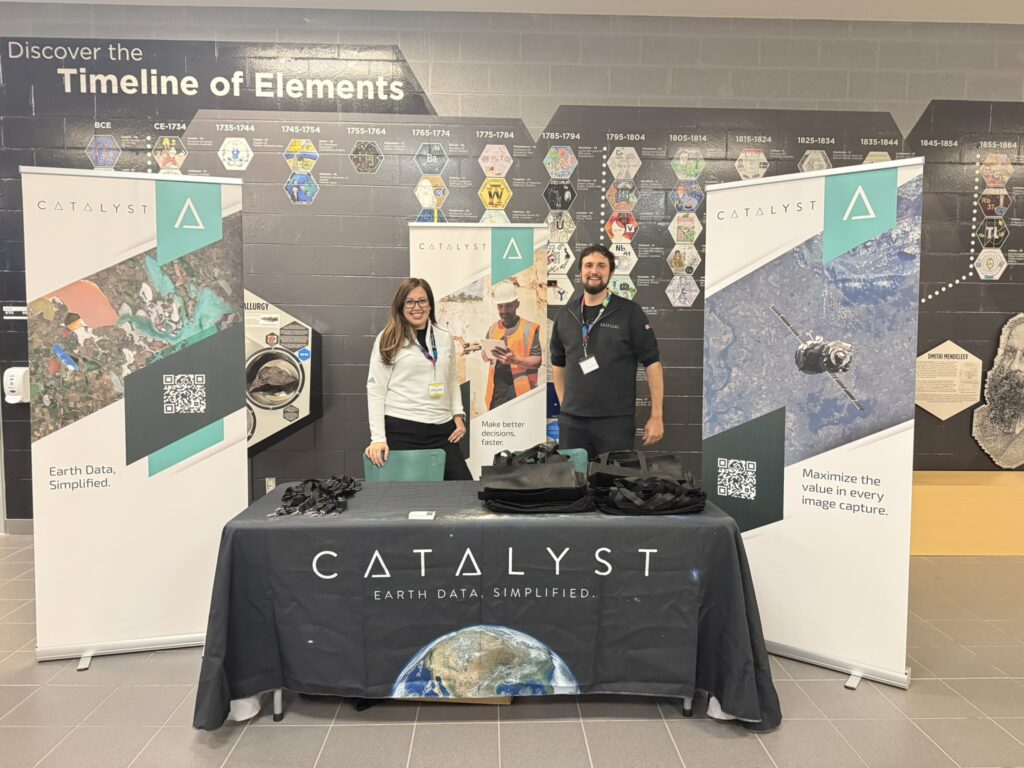
"The University of Waterloo has been part of our story for more than twenty years," says Kevin Jones, Chief Product Officer at PCI Geomatics, noting that the university has been a client and collaborator since the early days of PCI "They've used our software in multiple labs, trained countless students on remote sensing principles and many of those students have gone on to join our Team."
A Winning Approach to a Complex Problem
Frank and Isaac's project tackled the challenge "Through the Radar Looking Glass: Revealing Earth Processes with SAR." Their goal was ambitious: build an automated system for detecting ships in SAR imagery using artificial intelligence.
SAR is incredibly powerful for maritime monitoring - it works day or night, cuts through cloud cover, and captures detail that optical sensors simply can't. It is however notoriously difficult to work with. The imagery is full of speckle noise, unusual textures, and geometric distortions that confuse standard machine learning models.
Frank Tan & Isaac Huang, PCI Geomatics Young Scholar Award Winners, University of Waterloo shared, “CATALYST Professional gave us the foundation to process raw SAR granules and port file types compatible with our deep learning module. The CATALYST Team on-site were extremely helpful in providing guidance on the software and clarity in direction for our project.”
The students designed a solution that combined CATALYST Professional's preprocessing tools with custom deep learning. They used the software to clean the radar data, reducing noise, removing artefacts, and enhancing contrast, before feeding it into their AI model. The result was a system that could reliably spot ships across varied ocean conditions.
"Their approach showed real sophistication," Cristina notes. "They understood that you can't just throw raw SAR data at an AI model and expect good results. The preprocessing step is critical, and they implemented it thoughtfully."
Building a Pipeline for Talent
Beyond the technical achievement, Frank and Isaac are fourth-year students, representing the kind of curious, driven problem-solvers that the Earth observation industry needs.
The University of Waterloo's co-op programme creates a natural pathway between classroom learning and real-world application. Several of our current Team members came through this programme, bringing diverse backgrounds in mathematics, computer science, and remote sensing. That diversity makes us stronger.
"We're not looking for people who fit a single mould," Kevin explains. "Some of our best Team members came from pure mathematics backgrounds. Others specialised in remote sensing or physics. What they share is curiosity and a willingness to tackle hard problems."
What Comes Next
Frank and Isaac aren't stopping here. They've indicated plans to continue developing their project into a broader research platform, exploring advanced techniques like polarimetric decomposition and Vision Transformers adapted for radar data. They're also looking to expand their dataset with imagery from Sentinel-1 and the RADARSAT Constellation Mission.
For CATALYST, supporting events like the NASA Space Apps Challenge is about more than any single project. It's about nurturing the ecosystem that will drive Earth observation forward. The students working through the night on these problems today will be solving the challenges we haven't even imagined yet.
We're proud to have played a small part in Frank and Isaac's journey, and we can't wait to see where they take their work next.
The NASA International Space Apps Challenge at the University of Waterloo took place on October 4th–5th, 2024. Frank Tan and Isaac Huang received the PCI Geomatics Young Scholar Award for their project on AI-powered SAR ship detection.
Read more about the NASA Space Apps Challenge in the case study below.
Interested in learning more about SAR processing or CATALYST Professional? Contact us.