Catalyst.earth Logo
Catalyst.earth Logo

Analysis Ready Data

Analysis Ready Data is the fuel driving powerful new geospatial insights and global collaborations

The Americas From Space

What Is Analysis Ready Data
SCROLL FOR MORE

01

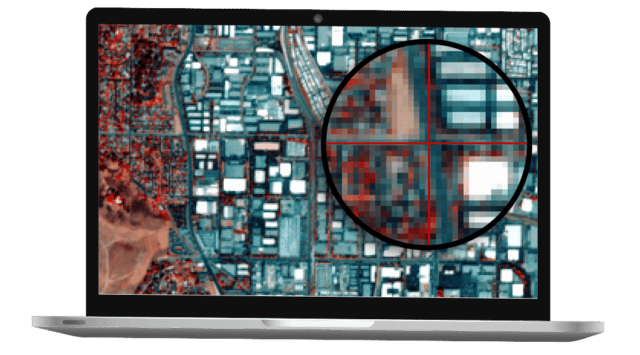
Image displaying analysis ready data
What is Analysis Ready Data
Creating Analysis Ready Data (ARD) is a vital pre-processing step that prepares Earth observation (EO) data for temporal and multi-source analysis such as geospatial-enabled AI and the increasingly sophisticated EO-based decision support used by Government and businesses.

By correcting geometric distortions and normalizing radiometry, ARD produces input data that delivers more consistent and scientifically valid analyses.

02

The Impact Of Analysis Ready Data
ARD products are primed for use in scientific analysis, time series analysis, machine learning, and AI models.

ARD reduces data preparation overheads by making data immediately useable and supports higher levels of interoperability, cross-functional collaboration, and data re-use.
CATALYST Enterprise LogoCATALYST OnBoard Logo

03

CATALYST and ARD
CATALYST is the first company to offer CEOS-compliant ARD for both sensor agnostic Synthetic Aperture Radar (SAR) Normalized Radar Backscatter (NRB) and Optical Surface Reflectance (SR) satellite imagery. This achievement reflects CATALYST’s 40-year heritage in EO data processing and collaboration with leading space agencies, including JAXA and NASA, in advancing analysis-ready data (ARD).

Partnering with CEOS to achieve ARD certifications allows CATALYST to highlight the increasing importance and value of multi-temporal analysis. In today’s data-driven world, these standards are vital for ensuring that individuals, businesses, space agencies and Governments can rely on decisions made using scientifically validated insights.

ANALYSIS READY DATA

Workflows
Creating Analysis Ready Data consists of multiple preprocessing stages to correct geometry, normalize radiometry, fuse imagery, and properly package the product. This provides optical Surface Reflectance (SR) and Normalized Radar Backscatter (NRB) measurements that are immediately available to analyze with other ARD sources, platforms, and repositories.
View Surface Reflectance Workflow
View Normalized Radar Backscatter Workflow
Step 1

GEOMETRIC CORRECTION

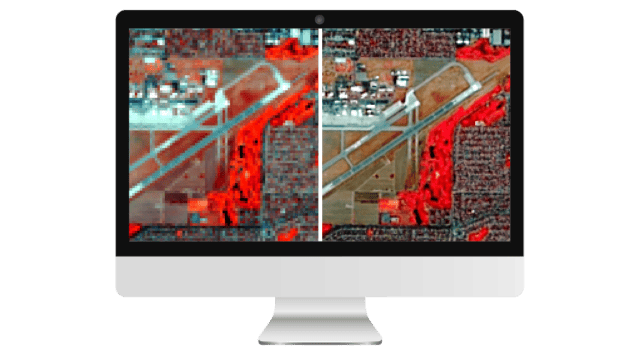
A minimum acceptable geometric accuracy is a crucial requirement when creating Analysis Ready Data (ARD). Our orthorectification and alignment capabilities have been tested to 1/10th of a pixel accuracy. This precision reduces false positives that skew analysis and require costly manual intervention.
Image showing geometric correction
Step 2

RADIOMETRIC NORMALIZATION

A minimum acceptable geometric accuracy is a crucial requirement when creating Analysis Ready Data (ARD). Our orthorectification and alignment capabilities have been tested to 1/10th of a pixel accuracy. This precision reduces false positives that skew analysis and require costly manual intervention.
Step 3

IMAGE FUSION

With CATALYST's innovative new image fusion technology you can now generate ARD imagery at even higher resolutions by using our Multi-Resolution Analysis (MRA) algorithm. MRA fusion creates pansharpened images that preserve the spectral integrity, ideal for higher resolution analysis.
Step 4

ARD PRODUCT PACKAGING

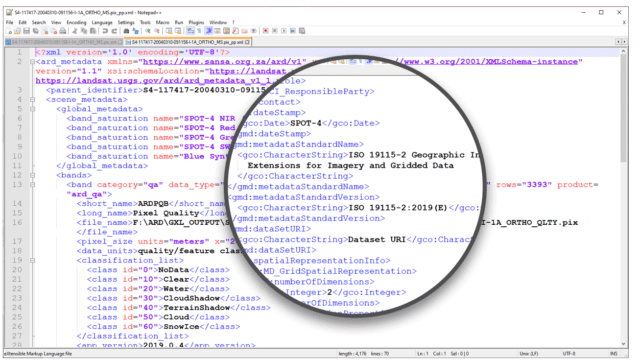
CEOS-ARD compliant imagery follows very strict packaging specifications around things like image formatting, metadata content and encoding, accuracy assessments, and product grading. By generating ARD products that are compliant to the CEOS-ARD requirements for packaging, you are helping to future-proof your investment and ensure inter-operability with other CEOS-ARD products.
Step 5

COLLABORATION & ANALYSIS

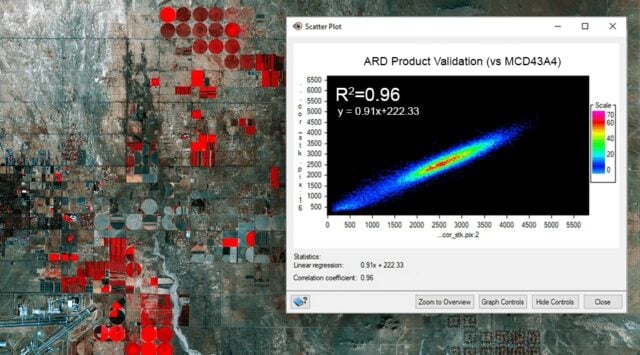
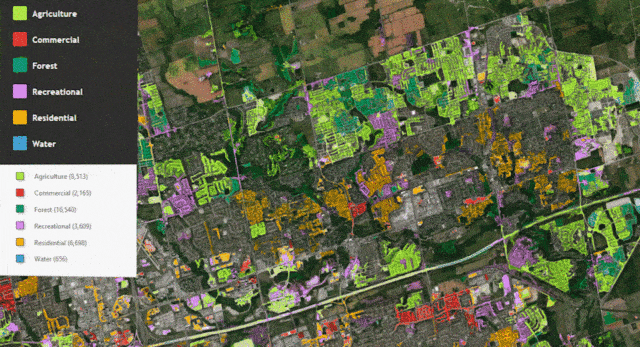
With Surface Reflectance Analysis Ready Data you can automate your data pipeline and promote reliable, repeatable, and relatable products for future-forward applications, such as continuous land cover monitoring, predictive analytics, time series analysis, and more.

GEOMETRIC CORRECTION

A minimum acceptable geometric accuracy is a crucial requirement when creating Analysis Ready Data (ARD). Our orthorectification and alignment capabilities have been tested to 1/10th of a pixel accuracy. This precision reduces false positives that skew analysis and require costly manual intervention.
Image showing geometric correction
Step 1

RADIOMETRIC NORMALIZATION

Radiometric normalization processes offered by the CATALYST platform include topographic normalization, spectral pre-classification and cross sensor regression methods to generate high quality ARD products.
Step 2

IMAGE FUSION

With CATALYST's innovative new image fusion technology you can now generate ARD imagery at even higher resolutions by using our Multi-Resolution Analysis (MRA) algorithm. MRA fusion creates pansharpened images that preserve the spectral integrity, ideal for higher resolution analysis.
Step 3

ARD PRODUCT PACKAGING

CEOS-ARD compliant imagery follows very strict packaging specifications around things like image formatting, metadata content and encoding, accuracy assessments, and product grading. By generating ARD products that are compliant to the CEOS-ARD requirements for packaging, you are helping to future-proof your investment and ensure inter-operability with other CEOS-ARD products.
Step 4

COLLABORATION & ANALYSIS

With Surface Reflectance Analysis Ready Data you can automate your data pipeline and promote reliable, repeatable, and relatable products for future-forward applications, such as continuous land cover monitoring, predictive analytics, time series analysis, and more.
Step 5
Step 1

Radiometric Terrain Correction

CATALYST’s Radiometric Terrain Correction algorithm removes geometric distortions caused by the influence of topography on the SAR backscatter values.
An image before CATALYST’s Radiometric Terrain Correction algorithm removes geometric distortions caused by the influence of topography on the SAR backscatter values.An image after CATALYST’s Radiometric Terrain Correction algorithm removes geometric distortions caused by the influence of topography on the SAR backscatter values.
Uncorrected
Corrected
Step 2

Geometric Correction – Sub-pixel accuracy

A minimum acceptable geometric accuracy is a crucial requirement when creating Analysis Ready Data (ARD). Our orthorectification and alignment capabilities have been tested to 1/10th of a pixel accuracy. This precision reduces false positives that skew analysis and require costly manual intervention.
Geometric Correction – Sub-pixel accuracy image beforeGeometric Correction – Sub-pixel accuracy image after
Reference
Orthorectified
Step 3

Data Packaging

CEOS-ARD compliant imagery follows very strict packaging specifications around things like image formatting, metadata content and encoding, accuracy assessments, and product grading. By generating ARD products that are compliant to the CEOS-ARD requirements for packaging, you are helping to future-proof your investment and ensure inter-operability with other CEOS-ARD products.
An image displaying the code of Normalized Radar Backscatter
Step 4

Collaboration and Analysis

With Normalized Radar Backscatter Analysis Ready Data, you can automate your data pipeline and promote reliable, repeatable, and relatable products for future-forward applications, such as coherence- based change detection, continuous land cover monitoring, predictive analytics, time series analysis, and more.
Image of SAR CCD

Radiometric Terrain Correction

CATALYST’s Radiometric Terrain Correction algorithm removes geometric distortions caused by the influence of topography on the SAR backscatter values.
An image before CATALYST’s Radiometric Terrain Correction algorithm removes geometric distortions caused by the influence of topography on the SAR backscatter values.An image after CATALYST’s Radiometric Terrain Correction algorithm removes geometric distortions caused by the influence of topography on the SAR backscatter values.
Uncorrected
Corrected
Step 1

Geometric Correction – Sub-pixel accuracy

A minimum acceptable geometric accuracy is a crucial requirement when creating Analysis Ready Data (ARD). Our orthorectification and alignment capabilities have been tested to 1/10th of a pixel accuracy. This precision reduces false positives that skew analysis and require costly manual intervention.
Geometric Correction – Sub-pixel accuracy image beforeGeometric Correction – Sub-pixel accuracy image after
Reference image
Orthorectified image
Step 2

Data Packaging

CEOS-ARD compliant imagery follows very strict packaging specifications around things like image formatting, metadata content and encoding, accuracy assessments, and product grading. By generating ARD products that are compliant to the CEOS-ARD requirements for packaging, you are helping to future-proof your investment and ensure inter-operability with other CEOS-ARD products.
An image displaying the code of Normalized Radar Backscatter
Step 3

Collaboration and Analysis

With Normalized Radar Backscatter Analysis Ready Data, you can automate your data pipeline and promote reliable, repeatable, and relatable products for future-forward applications, such as coherence- based change detection, continuous land cover monitoring, predictive analytics, time series analysis, and more.
Image of SAR CCD
Step 4
Who's it for?
Image of a government building
ARD for Governments
ARD helps Governments realize more value and impact from their earth observation data holdings by removing technical barriers that can prevent staff using data, opening up access to underutilised historic data sets, and producing more consistent and reliable outputs.
Image of a satellite station at dawn
ARD for Satellite Image Providers
We work with many of the top providers of satellite and aerial imagery to help them generate value added products, such as DEMs, ortho-images, mosaics, and now analysis-ready imagery (ARD). Note: ARD is only available for generating surface reflectance from satellite imagery.

Why Catalyst for ARD?

Amplify Data Impact
ARD amplifies impact by making complex EO data immediately accessible and usable by all, aiding interoperability and increasing reuse of data and analytic outputs.
Create Robust Outputs
ARD provides scientifically valid and traceable measurements for valid, consistent and reproduceable results across time periods, analyses, and users – vital for defendable decisions based on EO analysis.
Highest resolution ARD product
Most ARD workflows and products created today are based on the lower resolution multispectral image. Catalyst creates ARD imagery from the highest resolution possible, pansharpened imagery.

Create ARD imagery with CATALYST Enterprise

Thoroughly tested and scalable automated workflows to create CARD4L compliant ARD image products that reduce risk and cost.

Talk to us about ARD

Speak with us to learn how CATALYST can help you transform your imagery into Analysis Ready Data.
envelopephone-handsetcross